Harnessing the Power of 48V Systems with Din Rail DC-DC Converters
Understanding 48V Systems and Their Applications
The Importance of Voltage in Automation
Voltage plays a crucial role in automation and industrial control systems. In modern applications, 48V systems have emerged as a preferred choice due to their balance between safety and dc dc converters for rail efficiency. Operating at 48 volts minimizes the risk of electric shock while providing sufficient power for various devices. Many automation systems benefit from this voltage level, enabling reliable performance without compromising safety. The 48V standard is particularly advantageous in environments where multiple devices require a consistent and stable power supply. This voltage range also reduces energy losses, dc dc converters for rail making it suitable for energy-efficient applications.
Common Applications for 48V Systems
48V systems find their way into numerous applications, including telecommunications, data centers, and industrial automation. In telecommunications, 48V power supply units support essential equipment like routers and switches, ensuring uninterrupted connectivity. Data centers rely on 48V systems to power servers and network infrastructure, providing the necessary energy efficiency while minimizing heat generation. Moreover, industries such as manufacturing and logistics utilize 48V for automated guided vehicles (AGVs) and robotics, facilitating smooth operations and enhancing productivity. This versatility makes 48V systems a cornerstone in various sectors, driving innovation and efficiency.
Interplay of AC and DC in Power Supplies
The interaction between AC and DC power supplies shapes the landscape of modern electrical systems. While AC power dominates the grid, many devices, particularly in automation, operate on DC. 48V systems exemplify this transition, converting AC power from the grid into usable DC voltage through power converters. This conversion process allows for efficient energy distribution, as DC power reduces losses over long distances. Additionally, technologies like Power over Ethernet (PoE) further integrate AC and DC, enabling seamless power delivery alongside data transmission. Understanding this interplay is vital for optimizing power supply designs and ensuring system reliability.
Exploring Din Rail DC-DC Converters
What Are Din Rail DC-DC Converters?
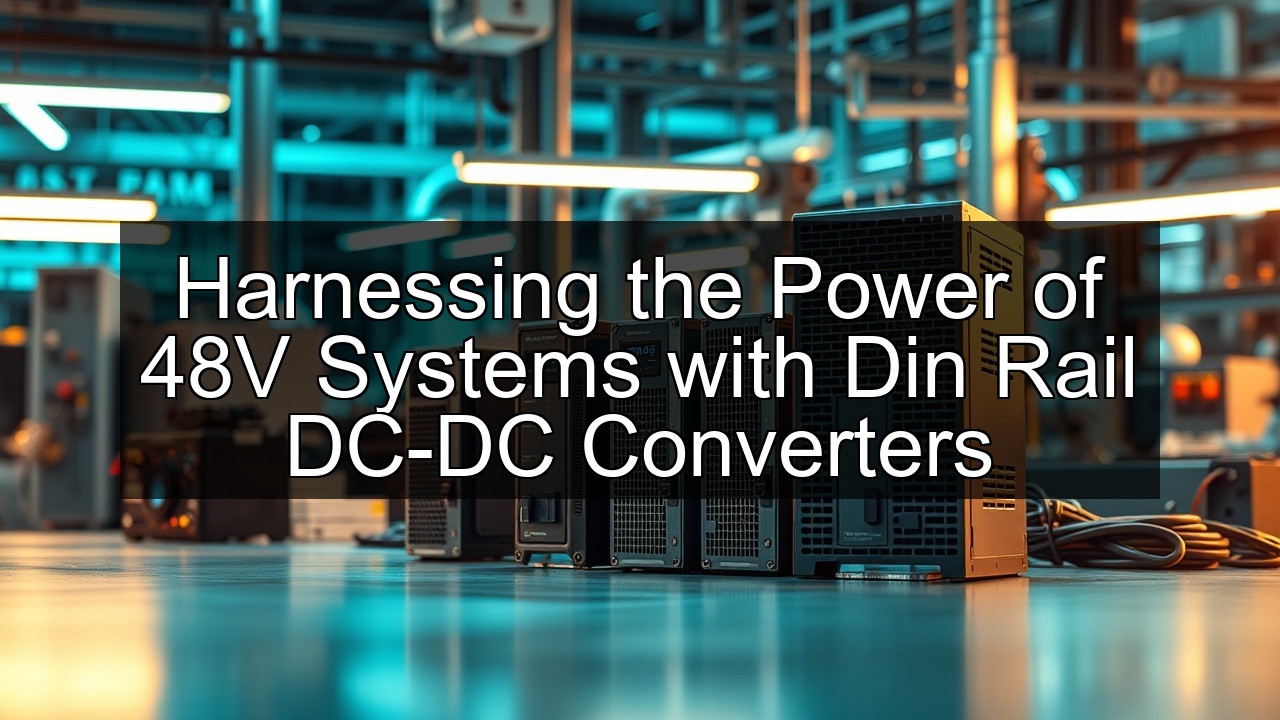
Din rail DC-DC converters are compact devices designed to convert one DC voltage level to another within a standardized din rail mounting framework. These converters have gained popularity in industrial automation and control systems due to their ease of installation and reliability. They offer solutions for various voltage conversions, such as stepping down or stepping up voltages in applications like telecommunications and automation. By accommodating different input and output voltage requirements, din rail DC-DC converters ensure that all components in a system receive the appropriate power supply, thus enhancing operational efficiency.
Key Components of Din Rail Power Converters
Understanding the key components of din rail power converters helps in appreciating their functionality. At the core of these converters are switching regulators, which efficiently manage voltage conversion while minimizing energy loss. Other critical components include inductors, capacitors, and transformers, each playing a role in filtering and stabilizing the output voltage. The integration of these elements within a compact chassis allows din rail DC-DC converters to achieve high power density, making them ideal for space-constrained environments. Additionally, advanced thermal management solutions ensure that these converters operate within safe temperature ranges, enhancing their longevity and reliability.
Types of Din Rail DC-DC Converters
Din rail DC-DC converters come in various types, catering to specific voltage and power requirements. Common variations include step-down (buck) converters, which reduce voltage levels, and step-up (boost) converters, which increase voltage. Additionally, bi-directional converters allow for flexible power distribution in systems requiring dual voltage levels. Some models offer features like adjustable output voltages or built-in protections against overloads and short circuits. With such diversity, users can select the appropriate din rail DC-DC converter based on their unique application needs, ensuring optimal performance and reliability in their power supply solutions.
Benefits of Using Din Rail DC-DC Converters
Compact Design for Space-Saving Solutions
Din rail DC-DC converters boast a compact design, making them ideal for applications where space is at a premium. Their slim profile fits neatly onto standard din rails, allowing for efficient use of available space within control cabinets and enclosures. This space-saving characteristic is particularly beneficial in crowded environments, such as industrial automation and telecommunications, where numerous components coexist. By utilizing din rail converters, engineers can streamline their designs without sacrificing performance. The reduced footprint facilitates easier maintenance and upgrades, contributing to improved overall system efficiency and reliability.
Enhancing Power Over Ethernet (PoE) Capabilities
Din rail DC-DC converters significantly enhance Power over Ethernet (PoE) capabilities, enabling seamless power delivery alongside data transmission. In PoE applications, these converters allow devices like IP cameras, access points, and VoIP phones to receive power through standard Ethernet cables. This integration simplifies installation, reducing the need for separate power supplies and cabling. The use of 48V systems aligns perfectly with PoE standards, ensuring that devices operate efficiently while maintaining compatibility with existing network infrastructure. By leveraging din rail DC-DC converters, businesses can enhance their network capabilities while optimizing power management.
Integration with Ethernet Switches and Wi-Fi Systems
Din rail DC-DC converters seamlessly integrate with Ethernet switches and Wi-Fi systems, providing reliable power solutions for network infrastructure. The converters ensure that critical components, such as switches and access points, receive a consistent and stable voltage supply. This integration compact din rail dc dc converters enhances overall network performance, reducing downtime and improving user experience. In environments where connectivity is paramount, such as offices and smart buildings, the reliable operation of these devices is essential. Utilizing din rail converters streamlines the power supply for these network systems, contributing to a more efficient and robust operational framework.
Implementing and Selecting the Right Din Rail DC-DC Converter
Factors to Consider When Choosing a DC-DC Converter
Selecting the right din rail DC-DC converter involves considering several essential factors. First, determine the input and output voltage requirements based on your specific application. Ensure that the chosen converter can handle the power load and offers sufficient current capacity for all connected devices. Additionally, assess the efficiency rating of the converter, as higher efficiency translates to lower energy losses and heat generation. Look for features such as short-circuit protection, thermal shutdown, and adjustable outputs, which can enhance the reliability and safety of your power system. Understanding these factors ensures that you choose the optimal converter for your needs.
Installation Tips for Din Rail Converter Modules
Proper installation is crucial for the effective operation of din rail DC-DC converters. Begin by ensuring that the din rail is securely mounted and capable of supporting the weight of the converter. Follow the manufacturer's guidelines for wiring and connections, paying close attention to polarity to avoid damage. Keep the installation area well-ventilated to prevent overheating, especially in high-power applications. Additionally, organize cabling to minimize interference and simplify troubleshooting. Regularly inspect connections and the overall condition of the converter to ensure long-term reliability and performance in your power supply system.
Future Trends in Din Rail DC Power Conversion
The future of din rail DC power conversion lies in innovation and increased efficiency. Emerging technologies focus on enhancing converter capabilities, such as higher power densities and improved thermal management. Additionally, the integration of smart features, like remote monitoring and diagnostics, will transform how engineers manage power systems. These advancements will lead to more reliable and efficient solutions, especially as industries continue to embrace automation and IoT. As the demand for energy-efficient power supplies grows, din rail DC-DC converters will play a pivotal role in shaping the future of power management across various sectors.
See Also
- Din Rail DC-DC Converters for Power Over Ethernet Applications
- Powering the Future with Din Rail DC-DC Converter Technology
- The Future of Power Supply Solutions with Din Rail DC-DC Converters
- How to Integrate Din Rail DC-DC Converters into Your Chassis Design
- Understanding Voltage Regulation in Din Rail DC-DC Converters